
DVLA Rules on ADHD and Driving: When You Must Tell Them

ADHD Tribe Editorial Team
Researched and written by the ADHD Tribe editorial team, using official UK guidance and primary research. Non-clinical information only.
Published 5 August 2026 · Last updated 5 August 2026 · Editorial policy
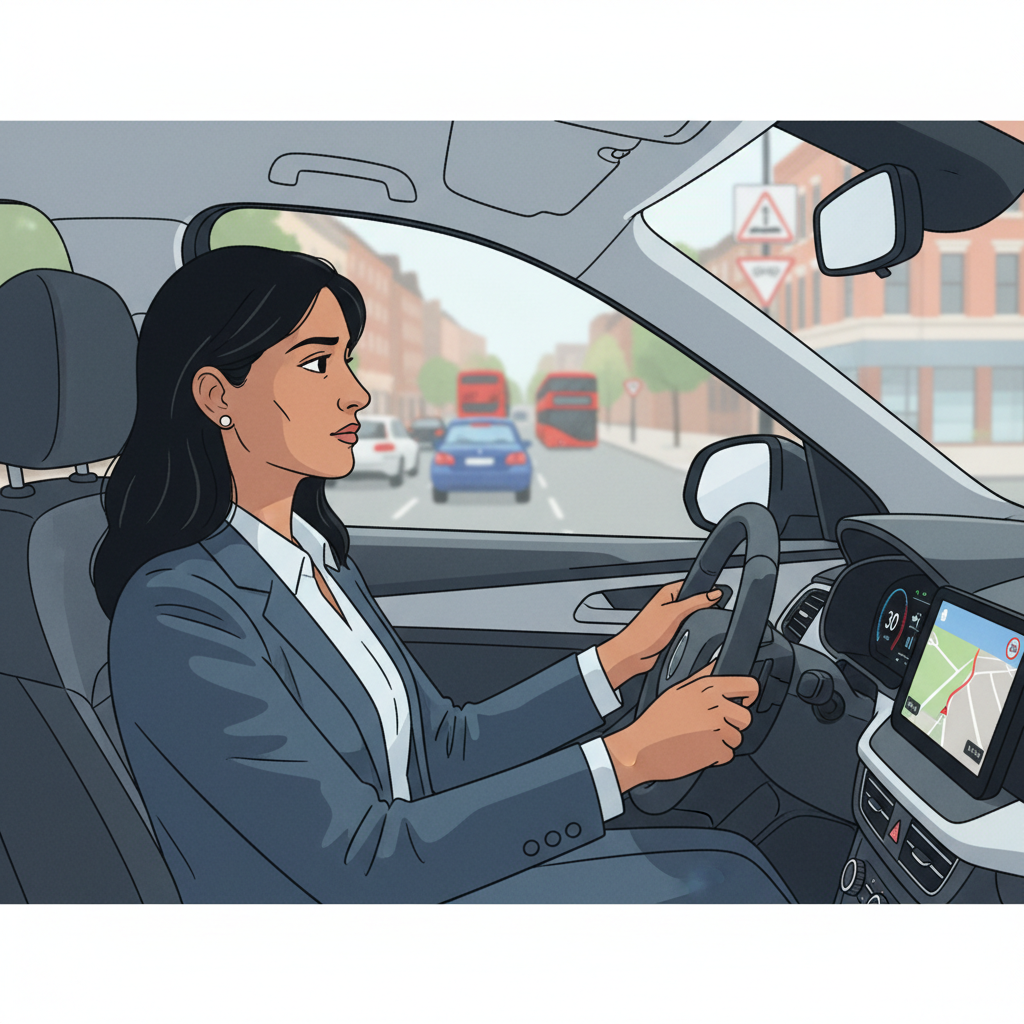
DVLA's duty to notify about ADHD is conditional, not automatic. Here's what GOV.UK guidance actually says, and where to check your own situation.
There is a lot of anxious speculation online about whether adults with ADHD must automatically inform the DVLA. The actual rule, as set out by GOV.UK, is more conditional than that. This article sets out what the guidance says, what the legal basis is, and where to check your own position.
The core rule: it depends on your driving, not just your diagnosis
GOV.UK's page on ADHD and driving states plainly: "You must tell DVLA if your attention deficit hyperactivity disorder (ADHD) or your ADHD medication affects your ability to drive safely." This page was originally published on 21 September 2012 and was last updated on 23 January 2025.
Read that sentence carefully. The duty is triggered by an effect on your ability to drive safely, whether that effect comes from the ADHD itself or from medication used to treat it. It is not phrased as an automatic requirement for everyone who has ever received an ADHD diagnosis. If your ADHD and any medication you take do not affect your ability to drive safely, the wording of this guidance does not, on its face, require notification.
This is a meaningful distinction, but it is also one that individual drivers are not always well placed to judge for themselves, particularly early in a diagnosis or when starting or changing medication. This is exactly the kind of judgement call GOV.UK, GPs and prescribers exist to help with, which is why this article does not attempt to tell you what your own personal position is.
The wider notification duty
This condition-specific page sits within a broader legal framework. GOV.UK's general guidance, "Telling DVLA about a medical condition or disability," confirms that if you hold a driving licence and have a condition that could affect your driving, you must tell DVLA. GOV.UK's "Check if a health condition affects your driving" tool exists to help drivers work out whether a specific condition needs to be reported.
The legal underpinning for this is section 94 of the Road Traffic Act 1988. Subsection (1) requires a licence holder to notify the Secretary of State in writing, "forthwith," if they become aware that they have a "relevant disability" or a "prospective disability" which has not previously been disclosed. Subsection (3) makes it an offence, without reasonable excuse, to fail to comply with that duty.
The financial risk of not telling DVLA
GOV.UK's guidance is direct about the consequence of not reporting a condition that affects your driving: "You can be fined up to £1,000 if you do not tell DVLA about a medical condition that affects your driving." This is a maximum penalty, not a fixed or automatic fine, and it applies to the failure to notify, not to having the condition itself.
Beyond the fine, GOV.UK's guidance also notes that DVLA may take other action, and that not declaring a relevant condition can have knock-on effects for insurance, which we cover below.
ADHD medication and the separate drug-driving offence
There is a second, distinct legal issue worth understanding: drug driving. GOV.UK's "Drugs and driving: the law" page states that it is illegal to drive if you are unfit to do so because you are on legal or illegal drugs, or if you have certain levels of specified controlled drugs in your blood. GOV.UK is clear that this can cover prescribed medicines, not only illegal substances.
This matters for some people who take stimulant medication for ADHD, since certain ADHD medications are controlled drugs. It does not mean that taking prescribed ADHD medication as directed automatically puts someone at legal risk on the road. It does mean this is a genuinely separate legal question from the DVLA notification duty above, and one where taking your own medical advice about your specific medication, dose and how it affects you is important.
What DVLA's guidance for medical professionals covers
DVLA also publishes "Miscellaneous conditions: assessing fitness to drive," part of its wider guide for medical professionals, which was last updated on 7 November 2025. This document is aimed at clinicians assessing fitness to drive across a range of conditions. We have not verified the exact clinical criteria or any specific licence restriction periods it may set out for ADHD, so we are not repeating them here. If you want that level of detail, the safest course is to read the current version of that guidance yourself, or ask your GP or prescriber to talk you through what it says.
Great Britain versus Northern Ireland
An important point that often gets missed: DVLA is the licensing authority for Great Britain, that is England, Scotland and Wales. Northern Ireland has its own separate driver licensing authority, the DVA (Driver and Vehicle Agency). If you hold a Northern Ireland driving licence, the GOV.UK pages referenced in this article, which relate to DVLA, are not the right place to check your obligations. You should look at DVA's own guidance instead.
What to actually do if you are unsure
This article is deliberately not telling you whether you, personally, need to notify DVLA. That is because the guidance itself makes the duty conditional on your own individual circumstances, including your specific symptoms, your specific medication, and how they affect your own driving. Sensible, practical steps include:
- Read the current version of GOV.UK's "ADHD and driving" and "Check if a health condition affects your driving" pages yourself, since guidance is updated periodically.
- Talk to your GP or the clinician who prescribes your ADHD medication about whether your condition or your medication affects your fitness to drive, and whether you should notify DVLA.
- Tell your motor insurer about any diagnosis or medication that DVLA also needs to know about. Insurers can treat non-disclosure as grounds to refuse a claim or void a policy, separately from any DVLA fine.
- If you are in Northern Ireland, check the equivalent guidance from DVA rather than DVLA.
None of this article is medical, legal or driving-fitness advice for your individual situation. It is a summary of what publicly available GOV.UK and legislation.gov.uk sources say. Your own circumstances should be checked with DVLA directly, your GP or prescriber, and your insurer.
Why this rule catches some people out
Rules that depend on an effect, rather than on a diagnosis alone, can be harder to apply in practice than a simple yes-or-no requirement. Someone recently diagnosed with ADHD, or someone who has just started or changed medication, may not yet have a clear sense of whether it affects their driving, particularly if effects such as tiredness, distractibility or changes in reaction time are subtle or fluctuate. This is one reason the guidance points people toward a GP or prescriber rather than expecting individuals to make this judgement entirely alone.
It is worth thinking of the assessment as an ongoing one rather than a single decision made at the point of diagnosis. If your symptoms change, if you start a new medication, or if you notice new effects such as drowsiness at a particular time of day, it is worth revisiting the question of whether your driving is affected, and whether that changes your position on notifying DVLA. This is not a suggestion that most people with ADHD experience such effects, simply a reminder that the underlying test in the guidance is about effect, not diagnosis, and that effects can change over time.
A hypothetical example
To illustrate the general principle only, consider a hypothetical driver who is diagnosed with ADHD and starts a new medication. In the first few weeks, they notice occasional drowsiness in the evening. Under the wording of GOV.UK's guidance, this would be a reasonable point to discuss with their prescriber whether that effect is significant enough to affect their ability to drive safely, and if so, whether DVLA needs to be told. If the drowsiness settles once their dose is stabilised, the position may look different again. This is purely illustrative; individual responses vary, and only a prescriber can advise on a specific medicine.
Keeping a record of what you have checked
Given the fine and insurance risks involved, it can be sensible to keep a simple note of when you checked your position, for example the date you read GOV.UK's guidance, the date you discussed driving fitness with your GP or prescriber, and what was said. This is not a legal requirement, and keeping such a note does not itself satisfy any notification duty you may have. But if a question ever arises later, for example from an insurer following a claim, having a record that you took the question seriously and sought advice at the relevant time may be useful context, even though it cannot substitute for actually notifying DVLA where required.
Talking to your GP or prescriber
Your GP or the clinician who prescribes your ADHD medication is best placed to discuss how your specific symptoms and medication might affect your driving, since this depends on individual factors, including your dose, how you respond to it, and any other conditions or medications you have. This article can only summarise the general GOV.UK guidance; it cannot tell you whether your own driving is affected, and it is not a substitute for that conversation.
Insurance is a separate but connected risk
It is worth spelling out why insurance matters here even though it is a separate system from DVLA notification. Motor insurance policies typically require you to disclose anything that could affect the risk being insured, and a diagnosis or medication that DVLA needs to know about will often also be something your insurer expects to be told about. If you do not disclose and later need to make a claim, for example after an accident, an insurer may investigate whether relevant information was withheld, and this can affect whether a claim is paid or a policy is treated as valid at all. Checking your policy documents, or asking your insurer directly what they expect you to disclose, is a sensible complement to checking your position with DVLA.
A note on coaching support
ADHD Tribe offers non-clinical coaching for adults with ADHD, which can include practical support with organising appointments, paperwork and everyday admin. We do not provide medical, legal or driving-fitness advice, and nothing in this article should be treated as a substitute for checking your own position with DVLA, a healthcare professional or your insurer.
References
- GOV.UK, "Attention deficit hyperactivity disorder (ADHD) and driving"
- GOV.UK, "Check if a health condition affects your driving"
- GOV.UK, "Telling DVLA about a medical condition or disability"
- GOV.UK, "Drugs and driving: the law"
- Road Traffic Act 1988, section 94
- DVLA, "Miscellaneous conditions: assessing fitness to drive"
Frequently asked questions
Do I have to tell DVLA if I have ADHD?
Only if your ADHD or your ADHD medication affects your ability to drive safely. GOV.UK's guidance states you must tell DVLA in that case. It is not framed as an automatic requirement for everyone with an ADHD diagnosis, but you should check your own position.
What happens if I don't tell DVLA about a condition that affects my driving?
GOV.UK states you can be fined up to £1,000 for not telling DVLA about a medical condition that affects your driving. This is a maximum penalty and there can also be other consequences, including for insurance.
Can taking ADHD medication be a drug-driving offence?
GOV.UK's guidance on drugs and driving states it is illegal to drive if you are unfit due to legal or illegal drugs, or above certain specified levels of controlled drugs, and this can include prescribed medicines. This is a separate legal issue from the DVLA notification duty, and you should take advice from your prescriber about your specific medication.
Does DVLA cover Northern Ireland?
No. DVLA licenses drivers in Great Britain (England, Scotland and Wales). Northern Ireland has its own licensing authority, the DVA, and readers there should check DVA's own guidance.
Where can I check exactly what applies to my situation?
GOV.UK's 'Check if a health condition affects your driving' tool is a starting point, but you should also speak to your GP or prescriber and to your motor insurer, since this article cannot tell you your individual position.
References
- GOV.UK, ADHD and driving. https://www.gov.uk/adhd-and-driving
- GOV.UK, Check if a health condition affects your driving. https://www.gov.uk/health-conditions-and-driving
- GOV.UK, Telling DVLA about a medical condition or disability. https://www.gov.uk/driving-medical-conditions
- GOV.UK, Drugs and driving: the law. https://www.gov.uk/drug-driving-law
- Road Traffic Act 1988, section 94. https://www.legislation.gov.uk/ukpga/1988/52/section/94
- DVLA, Miscellaneous conditions: assessing fitness to drive. https://www.gov.uk/guidance/miscellaneous-conditions-assessing-fitness-to-drive
Related articles
ADHD Tribe coaching is non-clinical. It is not a diagnosis, assessment or medical treatment, and it is not a substitute for advice from your GP or a qualified clinician.
ADHD Tribe Editorial Team
Researched and written by the ADHD Tribe editorial team, using official UK guidance and primary research. Non-clinical information only.
Published 5 August 2026 · Last updated 5 August 2026 · Editorial policy
Want practical support? See 1-to-1 ADHD coaching or the coaching FAQ.